
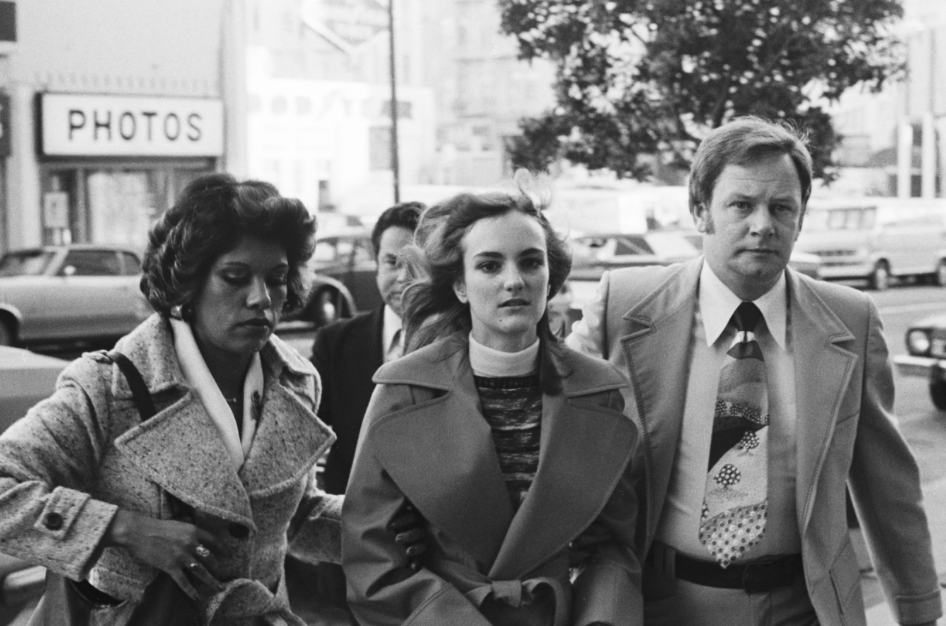
Sunday marked the 50th anniversary of the Patty Hearst kidnapping by members of the Symbionese Liberation Army. I had expected to see a flood of media attention, and I did. Pieces in the San Francisco Chronicle and Washington Post, along with a story by the Associated Press that was picked up by outlets nationally and worldwide, too, I assume.
It never took an anniversary for people to talk about Patty. She’s regularly been a conversational focal point at different times in the last 50 years. She’ll be quiet and then pop up — with a memoir, on Larry King, in a John Waters movie, at the Westminster dog show. Unless she’s promoting something, she’s famously reticent and hasn’t talked about her days in the SLA since her book came out more than 40 years ago.
Why does she remain such an object of fascination? I can think of a few reasons.
Her story is just so bizarre. She’s 19 years old, just living her life in Berkeley, engaged to her former teacher. Then three people knock on her apartment door and she’s kidnapped. She’s used as a bargaining chip–she’s a member of the wealthy Hearst family, and the SLA wants to exchange her for two members in jail. When that doesn’t work, they ask for money to feed the poor in California. That goes badly, too.
About six weeks after she’s kidnapped, the SLA releases a cassette tape in which Patty says she has joined the SLA and has taken the name Tania. She says she’s now fighting for the revolution and for oppressed people everywhere. Wait, what???? The SLA releases a picture of Hearst in combat gear, holding a rifle in front of the SLA emblem.
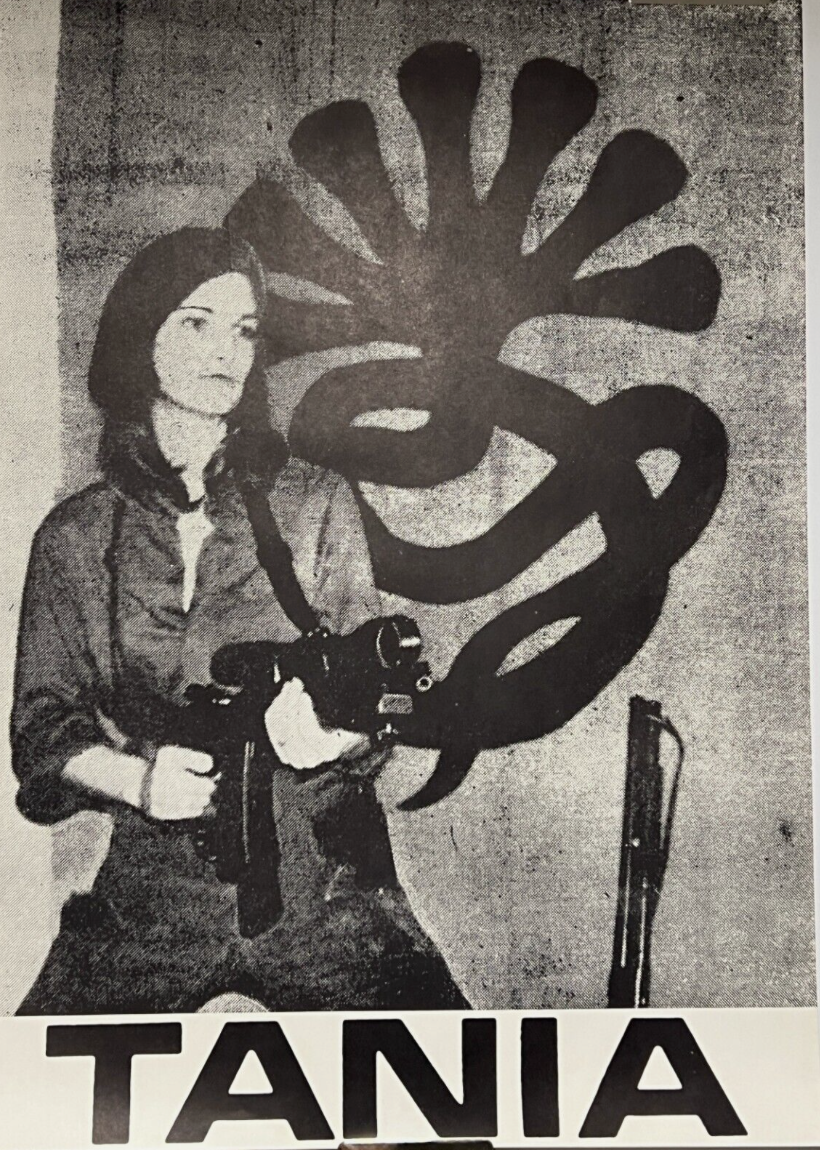
So you have a rich, privileged, young woman who now says she has joined the radical left and is toting a machine gun. Yes, bizarre.
She goes on to participate in two bank robberies, shoots up a sporting goods store, and criss-crosses the country before finally being apprehended in September 1975.
At her trial, Hearst’s defense team claims she was brainwashed and coerced into joining the SLA and taking part in the crimes. The world first hears of “Stockholm syndrome.” The case that coined “Stockholm syndrome” had occurred just a couple of years before, in 1973. The theory is that hostages can identify with their captors in a bid to stay alive and stay on the captors’ good sides. Hearst’s defense said she had no choice but to go along with SLA plans. It was either that, or be killed.
The strategy didn’t work and Hearst was sentenced to prison. She served 22 months before President Jimmy Carter commuted her sentence and set her free. President Bill Clinton gave her a pardon.
So a lot is going on here to keep up fascinated. Because we don’t exactly know what Hearst was going through, people love to speculate. Was she really brainwashed? Or was she a willing participant? Either way, it’s a story that’s hard for us to wrap our brains around.
Like with other cult-like situations, as viewers we like to put ourselves in the shoes of the participants. How would I act in that situation? Would I go along with my captors or would I try to fight my way out? Or, would I actually identify with their revolutionary principles?
Hearst’s wealth and status also are talking points. Her commutation and pardon bring up issues of privilege and class. No way would her sentenced have been commuted nor would she have been pardoned if not for her name. There’s a sense of injustice and unfairness that keep us talking.
At the time of her kidnapping and trial, her case was fascinating because the media used it as a fear tactic, a warning to other parents. Watch out for the radicals, parents–this could happen to your daughters, too. There was already a major culture clash between hippies and their parents–this case widened that gap.
I understand the fascination with Hearst. It is one of those bizarre stories that you just can’t make up. As a culture, we are fascinated with true crime. The issue that has always bothered me, though, is that Hearst dominates any conversations about the SLA. One reason I wanted to write a book about Camilla Hall is that I wanted people to know about one of the “ordinary” members of the SLA and how she got to that point in her life. I felt sad that Camilla’s name was lost amid the hype. Six SLA members died in a shootout with L.A. police on May 17, 1974: Camilla, Patricia Soltysik, Angela Atwood, Nancy Ling Perry, Willie Wolfe, and Donald DeFreeze. The actions of Patty Hearst and Bill and Emily Harris on that day led police to the hideout of their comrades.
Let us not forget their names.
 If You Have Five Seconds to Spare